
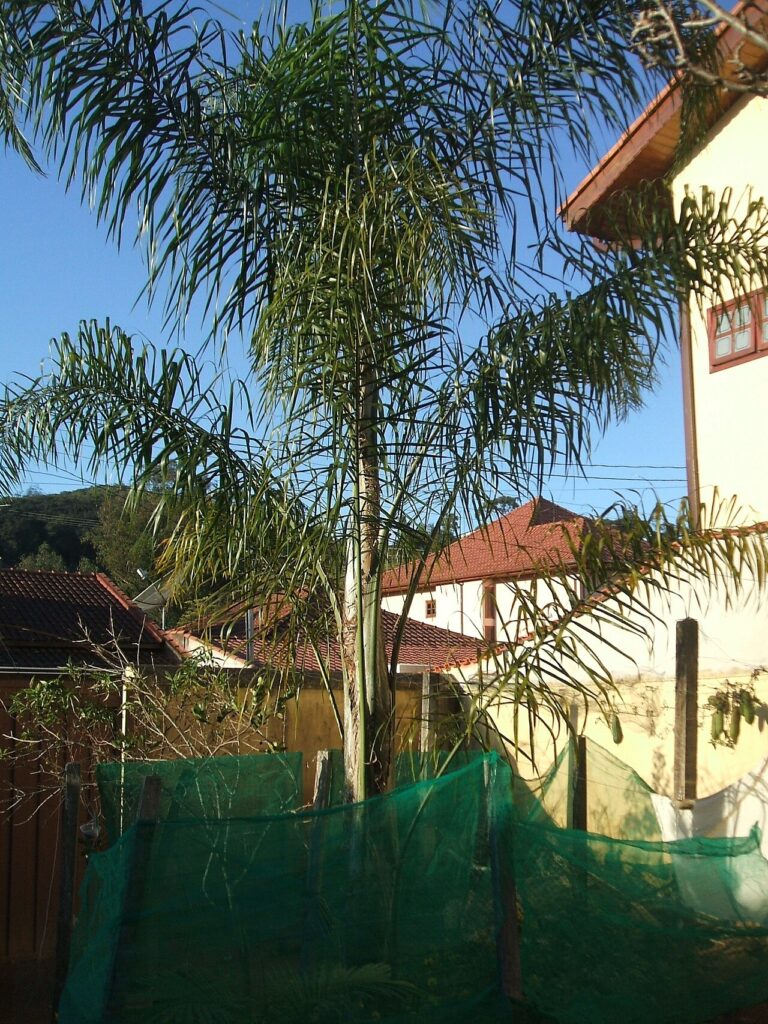
Good queen palm care is the difference between a palm that looks tired and yellow and one that turns heads from the street. Queen palms (Syagrus romanzoffiana) are one of the best-selling plants at Slidell Nursery because they grow fast, look tropical and fit almost any yard. Here are nine proven tips to keep yours healthy in Slidell and across South Louisiana.

Why Queen Palm Care Matters in South Louisiana
Our climate is a great fit for queen palms. Long, hot summers and plenty of rain help them grow quickly.
The same climate also brings challenges: heavy clay soils, nutrient-poor fill dirt in new subdivisions and the occasional hard freeze. A little planning up front makes queen palm care much easier for years to come.
1. Pick a Sunny Spot
Queen palms want full sun to part sun. Six or more hours of direct light keeps the trunk strong and the canopy full.
Leave room overhead. A mature queen palm can reach 25 to 50 feet, so keep it away from power lines and give it a few feet of space from your roof line.
2. Plant at the Right Depth
Dig a hole about twice as wide as the pot but no deeper. Set the palm so the top of the root ball sits level with the ground.
Planting too deep is one of the most common mistakes we see. It can lead to root rot and a slow decline.
3. Improve Drainage
Queen palms like moisture but hate soggy roots. In heavy Slidell clay, mix some quality garden soil or compost into the backfill.
In low spots, plant on a slight mound so rainwater drains away from the trunk.
4. Water Deeply While It Gets Established
For the first two to three months, water a new palm deeply two or three times a week unless it rains. After that, water during dry spells.
A slow soak with a hose at the base works better than a quick spray from a sprinkler.
5. Feed with a Palm Fertilizer
The most important step in queen palm care is the right fertilizer. Queen palms are known for magnesium and manganese deficiencies. These show up as yellow older fronds or weak, frizzled new growth.
Use a slow-release palm fertilizer that contains magnesium and manganese. Apply it in spring, summer and early fall, following the label.
6. Mulch, But Keep It Off the Trunk
Two to three inches of mulch helps hold moisture and keeps weeds and string trimmers away from the trunk. Pull the mulch back a few inches from the base to prevent rot.
7. Prune Only Dead Fronds
Remove fronds only once they are fully brown. Green or partly yellow fronds are still feeding the palm, so leave them in place.
Avoid “hurricane cuts” that strip a palm down to a few fronds. They weaken the tree.
8. Protect Young Palms from Hard Freezes
Established queen palms usually handle light frosts, but temperatures in the mid-20s °F can damage them. Young palms are the most at risk.
When a hard freeze is forecast, water the day before, then cover the canopy with frost cloth. Wrapping the trunk can add extra protection. Wait until spring to judge damage before cutting anything.
9. Buy a Healthy, Local Palm
Queen palm care starts at the nursery. Look for a palm with a straight trunk, several healthy green fronds and a firm spear leaf in the center. Palms grown and sold locally are already used to our heat and humidity.
You can see our current queen palms on the Queen Palm page, or browse all of our palms and trees.
Queen Palm Care FAQ
How fast do queen palms grow?
With good queen palm care, they can add one to three feet of height a year in South Louisiana.
Why are my queen palm fronds turning yellow?
Yellowing older fronds usually point to a magnesium shortage. Frizzled, weak new fronds often mean a manganese shortage. A palm fertilizer with both nutrients usually fixes this over time.
Where can I learn more?
The LSU AgCenter has research-based gardening information for Louisiana homeowners.
Visit Slidell Nursery at 1605 Lawes St, Slidell, LA 70461 — open Tuesday, Thursday, Friday and Saturday from 10am to 2pm. Right now we are offering 20% off all in-store purchases. Questions? Call or text 504-475-8084.