
Vitex tree – 3 Gallon (6 ft tall) $40.00
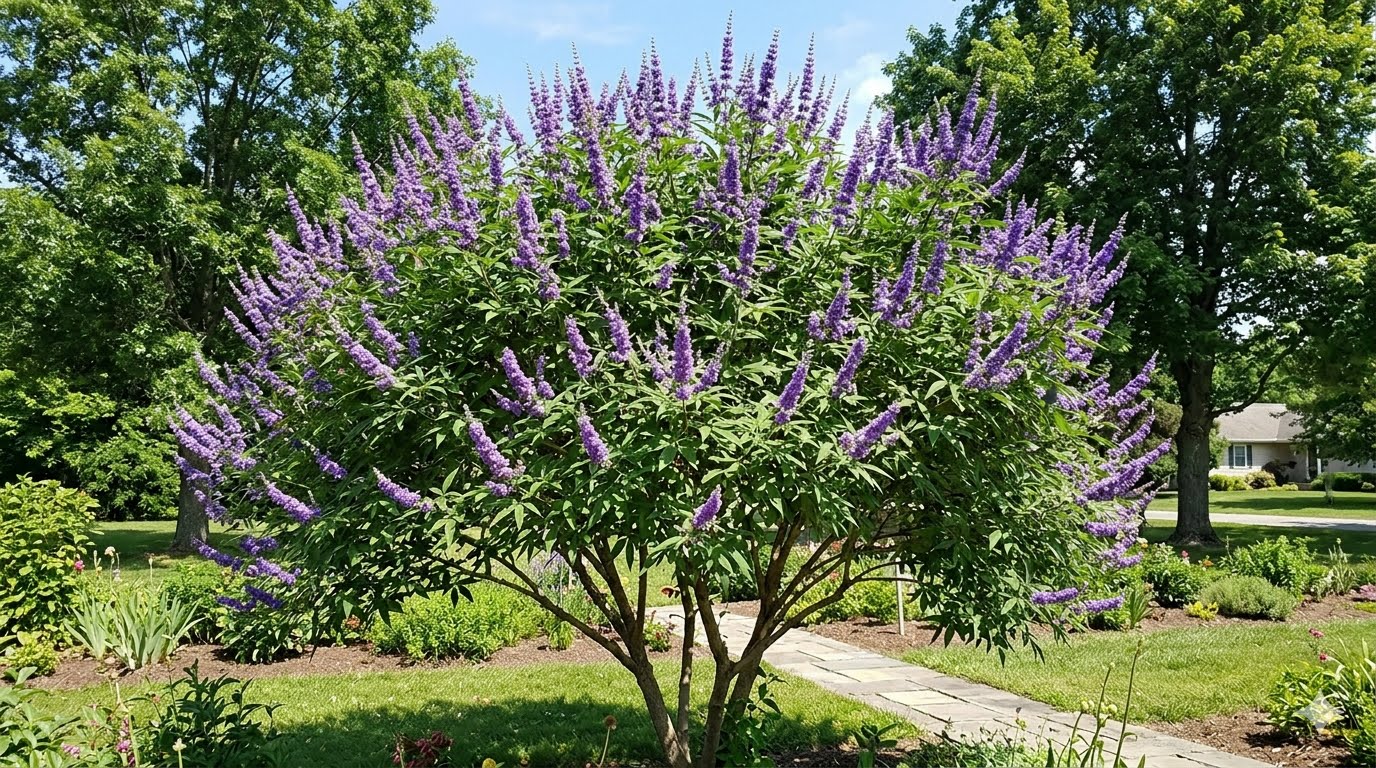
Vitex tree – 3 Gallon (6 ft tall) $40.00
$40.00
Vitex Tree, commonly known as the Chaste Tree, is a fast-growing, deciduous ornamental tree admired for its long spikes of fragrant purple-blue flowers that bloom throughout summer.
5 in stock
Category Trees
Vitex Tree, commonly known as the Chaste Tree, is a fast-growing, deciduous ornamental tree admired for its long spikes of fragrant purple-blue flowers that bloom throughout summer. Its airy branching habit and butterfly-attracting blooms make it a standout in landscapes. Vitex thrives in hot climates and provides vibrant color when many other plants fade.
Special Features
-
Long blooming season
-
Attracts butterflies and pollinators
-
Drought tolerant
-
Fragrant flower spikes
-
Excellent for Southern landscapes
The Vitex agnus-castus, commonly known as the purple Vitex or Chaste Tree, stands as a testament to nature’s ability to combine rugged endurance with breathtaking beauty. Native to the Mediterranean region and central Asia, this deciduous shrub or small tree has journeyed far beyond its ancestral lands. Today, it is celebrated globally as a spectacular ornamental feature in temperate and subtropical landscapes. Characterized by its dramatic spikes of lavender-purple flowers and aromatic grayish-green foliage, the purple Vitex serves not only as a visual masterpiece in modern gardens but also holds a rich historical legacy that bridges ancient folklore with contemporary ecological value.
Morphologically, the purple Vitex is a striking specimen. It typically grows as a multi-trunked small tree, reaching heights and widths between ten and fifteen feet, though it can grow larger under ideal conditions. Its growth habit is naturally vase-shaped and sprawling, giving it an elegant, architectural presence in garden designs. The leaves are palmate, resembling a hand with five to seven narrow leaflets, and they emit a clean, sage-like fragrance when crushed. However, the true crowning glory of the Vitex is its summer bloom cycle. From late spring through the heat of August, the tree produces elongated terminal panicles, often twelve inches long, packed with tiny, vibrant purple blossoms. These upright spikes create a stunning visual contrast against the dark foliage, resembling the spikes of a butterfly bush or a lilac, which frequently earns the Vitex the nickname “Texas Lilac.”
Beyond its physical allure, the purple Vitex is deeply rooted in human history and ethnobotany. The common name “Chaste Tree” originates from ancient Greece and Rome, where the plant was strongly associated with the preservation of chastity. Roman women strewed the aromatic leaves on their beds during the festival of Ceres to honor the goddess of agriculture and maintain purity. In medieval Europe, the tree’s peppery berries were harvested and utilized in monasteries, earning them the name “Monk’s Pepper,” as they were believed to help monks maintain their vows of celibacy. In modern times, the medicinal intrigue surrounding Vitex persists. Extracts from the fruit are widely utilized in contemporary herbal medicine to assist in balancing hormones, regulating menstrual cycles, and alleviating symptoms of premenstrual syndrome, proving that its historical reputation carries a thread of scientific validity.
From a cultivation perspective, the purple Vitex is a gardener’s delight due to its exceptional resilience. It is highly drought-tolerant once established and thrives in conditions that would cause other ornamental trees to wither. It demands full sun to produce its signature profusion of blooms and prefers well-drained soil, comfortably tolerating poor, rocky, or alkaline earth. Its ability to withstand intense summer heat and neglect makes it a staple in xeriscaping and water-conscious landscape designs. Furthermore, the Vitex requires minimal maintenance. Annual pruning in the early spring can help shape the canopy and encourages a denser flush of new growth, which is vital since the tree flowers on new wood.
Ecologically, the purple Vitex functions as a vibrant hub of biodiversity. The nectar-rich purple spikes are irresistible to a wide array of pollinators. Throughout the summer months, a single Vitex tree becomes a buzzing sanctuary for honeybees, native bees, and migrating butterflies. Hummingbirds are similarly drawn to the tubular structure of the blossoms. By introducing a purple Vitex into a landscape, gardeners actively support local ecosystems, providing crucial nourishment during the hottest months of the year when other nectar sources may be scarce.
In conclusion, the purple Vitex tree represents a harmonious blend of aesthetic brilliance, historical depth, and environmental utility. Its striking purple spires bring color to the peak of summer, while its historical legacy adds a layer of cultural fascination. Combined with its ironclad resistance to heat and drought, the Vitex remains an irreplaceable asset for sustainable, beautiful landscaping, enriching both the human visual experience and the local ecosystem.
Related products

Fresh Plants. Expert Advice. Beautiful Gardens
Visit Slidell Nursery for top-quality greenery and personalized service you can trust
Learn More